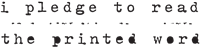
Sunday, April 27, 2014

Dewey's 24 Hour Readathon :: Hours 19 - 21

I managed to finish Crime and Punishment during hour 19. I started the day less than half-way through the book so I'm pretty happy to have finished it.

After finishing such a heavy book, I decided to read something a little more fun — Sharp by Alex Hughes — a police procedural with a psychic sci-fi twist. This is Hughes second book starring recovering addict and psychic consultant to the Dekalb police department of the near future, Alex Ward. I loved Clean, the first book in the series so I'm looking forward to this one.

With three hours to go I am feeling remarkably alert. My eyes are a little tired, but I don't feel like my eyes are so heavy that I'm about to fall asleep. I think this bodes well as it is 5:15 a.m. here in the Charlotte, NC area; a time that I am normally up. I think I am through the "wall" of the wee hours of the morning. So, here's to the finish!

Dewey's 24 Hour Readathon :: Hours 16 - 18

For the last three hours I have been reading Crime and Punishment. I have only 36 pages left. I'm looking forward to finishing it in the next couple of hours. I'm really psyched because I hadn't really planned on finishing any books during the readathon. I wasn't sure I'd be able to continue reading a book like Crime and Punishment this late. I am getting a little tired, but I think I can push on to finish it.

Saturday, April 26, 2014

Dewey's 24 Hour Readathon :: Hours 13 - 15

During hour 13 I finished "The Gate of Flying Knives" in Sanctuary. I then switched to reading Crime and Punishment again and finished Part V1. I now have a little over 100 pages to go. At my present (slow) rate of speed it'll take me four hours of reading to reach the end of Crime and Punishment. I want to go for it, but I'm getting tired and find that Crime and Punishment might not be the thing to read as the night wears on.

And now, for the My Name In Books Mini-Challenge:

J - Journey Through Genius by William Dunham.

O - Our Man in Havana by Graham Greene.

S - Speaks the Nightbird by Robert McCammon.

E - Edward II by Christopher Marlowe.

P - Paradise Lost by John Milton.

H - How Shall We Live by Robert Krznaric.

Dewey's 24 Hour Readathon :: Hours 10 - 12

I decided for a little bit of a change of pace and read some of Peter Gay's Modernism: The Lure of Heresy from Baudelaire to Beckett and Beyond before going back to Sanctuary. I didn't quite finish "The Gate of Flying Knives" but will get back to it presently.

I also took a break to have dinner with my family and finish watching the latest episode of Jim Henson's Creature Shop Challenge. I have to say that my family disagreed with the sending home of Lex. Even though it was her failure to get the movement on the creature right, we felt that she wasn't supported by her partner, Jake. He spent too much time sculpting the creature's head and feet, which was completely unnecessary since the challenge was about movement and not about detail.

Here is my Shelfie:

And my Mid-Event Survey:

What are you reading right now?

I'm mostly switching back and forth between Crime and Punishment and Sanctuary.

How many books have you read so far?

I have read from three books so far, but haven't finished any. I don't anticipate that I will finish any though.

What book are you most looking forward to for the second half of the Read-a-thon?

I plan on continuing with the books I am reading, but I may have to throw in something a little easier to read as the night wears on.

Did you have to make any special arrangements to free up your whole day?

I didn't have a special arrangement per se, but my family has been very understanding of my laying around the house all day with my nose in a book.

Have you had many interruptions? How did you deal with those?

Interruptions will happen. I don't have the intention of reading for the entire 24 hours and that makes it easier to take time away from reading to deal with interruptions like ... say ... dinner.

Are you getting tired yet?

I'm am definitely getting tired. I had a wisdom tooth removed earlier this week and the medication I am required to take makes me dizzy. But, I'm just going to keep going the best that I can and hope that I can make it the full 24 hours.

Dewey's 24 Hour Readathon :: Hours 7 - 9

For hours 7 through 9 I continued to read the same two books: Crime and Punishment and Sanctuary. In Crime and Punishment I've managed into Part V of the book. I must say that the book has really started to pick up: the intensity between Sonia and Raskolnikov; the drama of Porfiry Petrovich's pursuit of Raskolnikov as the murderer; as well as the breakup of the marriage between Pyotr Petrovich and Raskolnikov's sister. In Sanctuary I read the short story "The Face of Chaos" by Lynn Abbey. It was a story about the gods and fate that I didn't find as engaging as John Brunner's "Sentences of Death." Next up in Sanctuary is Poul Anderson's "The Gate of Flying Knives." That sounds exciting doesn't it?

Dewey's 24 Hour Readathon :: Hours 4 - 6

I spent hours four through six reading Crime and Punishment. I also took a little break to eat lunch and chat with my 12 year old son.

Lisa, of Lisa's World of Books, is hosting the hour six mini challenge. In essence, Lisa asks what are your favorite books of the year so far? I haven't read as many books as I usually do by this time of year. Last year I moved from running marathons to running ultra-marathons. Ultra-marathons require so much more training that it has reduced the amount of time that I read. That being said, I do have two favorites for the year, so far. My favorite fiction novel of the year so far is The Lives of Tao by Wesley Chu, a sci-fi comedy action book, I found it to be a real fun read. My favorite non-fiction book I read this year is Jane McGonigal's Reality Is Broken. It is a fascinating read. I'm only sorry that it took me so long to read it because most of the games she talks about have already vanished from the internet. It is still a good book though.

Dewey's 24 Hour Readathon :: Hour 3

So for hour three I decided to switch to something a little easier to read. I picked up Sanctuary edited by Robert Lynn Asprin from a book sale at my local library. It is a omnibus of Thieve's World from 1979, Tales from the Vulgar Unicorn from 1980, and Shadows of Sanctuary from 1981. It collects short stories set in the town of Sanctuary, a backwater of the Rankin Empire. There are stories by Philip José Farmer, A. E. van Vogt, C. J. Cherryh, and Vonda McIntrye among others.

I bought the book, a steal at $1, for the nostalgia value. I'm glad I did. The first story, "Sentences of Death," by John Brunner, was very entertaining. I'm looking forward to reading more, although I'm probably going to return to Crime and Punishment for hour four.

Dewey's 24 Hour Readathon :: Hour 2

I continued to read Crime and Punishment. I only managed 26 pages, but I did reach the end of part III. Unfortunately, I'm already feeling a little drowsy. That does not bode well for my making it the full 24 hours.

Anyway, onward we go ...

Dewey's 24 Hour Readathon :: Hour 1

So, the first hour is done. I read Crime and Punishment by Fyodor Dostoevsky. This is a book that I was already reading. I only managed 28 pages, but I find that I have been reading the book quite slowly. I find the text a little hard to follow at times. Perhaps it is the translation I'm reading, Constance Garnett's translation, but it seems somehow archaic in how it is written.

Well, back to it then. I'll probably continue reading Crime and Punishment in the next hour.

Hour Zero Kick Off Post

What fine part of the world are you reading from today?

I am reading from just outside Charlotte, North Carolina, in the United States.

Which book in your stack are you most looking forward to?

I don't really have a stack. I have a pretty big library of my own to choose from. I'm going to start with what I am currently reading: Crime and Punishment by Dostoevsky. After that who knows. I'd like to get a little bit of Thomas Piketty's Capital in the Twenty-First Century read, but that is a pretty dense book.

Which snack are you most looking forward to?

I don't really snack that much. But I do drink a lot of tea, so I suppose I'm looking forward to that.

Tell us a little something about yourself.

I had a wisdom tooth removed earlier this week and the antibiotic I'm taking makes me dizzy.

If you participated in the last read-a-thon, what’s one thing you’ll do different today?

I have participated in readathons before, but not for a couple of years. The thing that is different this time is that I'm not as confident that I'll make it the full 24 hours.

Doing the Dewey's 24 Hour Readathon after a Two Year Absence

I'm so excited to do the Dewey's 24 Hour Readathon again after missing it for two years. I've been looking forward to it ever since I found out that it would fall on a weekend that I didn't have to work. But I had an impacted wisdom tooth removed earlier this week. I thought that it would give me the perfect excuse to sit around and read all weekend. I underestimated how serious the recovery would be. My face is swollen. The antibiotic I have to take makes me dizzy. It's hard for me to eat. My hopes were dashed; I thought I wouldn't be able to do the Readathon. But I've missed it the last two years and it's a lot of fun. So, I'm going to at least try to do the this thing!

Sunday, April 22, 2012

Dewey's Readathon April 2012 — Summary

I almost fell asleep during hour 23, but I made it! I spent about 17 of the last 24 hours reading. In that time I finished seven books:

  1. The Lover's Dictionary by David Levithan
  2. The Yellow Arrow by Victor Pelevin
  3. Swerve by Stephen Greenblat
  4. Snakes and Earrings by Hitomi Kanehara
  5. The Leftovers by Tom Perrotta
  6. Doubt by John Patrick Shanley
  7. Lucifer at the Starlite by Kim Addonizio

In addition, I also read but did not finish Witches Incorporated by K. E. Mills.

In total, I read 1,159 pages.

The Lover's Dictionary was my favorite read during the readathon, but The Leftovers and Swerve were close behind. The Yellow Arrow was the most disappointing of the books I read.

Congratulations to all the readers. Thank you to the cheerleaders and the organizers.

Dewey's Readathon April 2012 — Hour 24

I finished the last 11 pages of Kim Addonizio's Lucifer at the Starlite this hour before returning to K. E. Mills' Witches Incorporated to read 16 more pages.

Dewey's Readathon April 2012 — Hour 23

I read 49 pages of poetry from Kim Addonizio's Lucifer at the Starlite. To stay awake I read while pacing around my kitchen. I will pace again in the next, an final, hour to finish reading Lucifer at the Starline.

Shel at Hungry Readers offers us a mad lib to complete. Here is mine:

This axis is red! Joseph has never disguised so much. The genius I'm currently killing is long and dirty. When this is over, I will run for the whole summer.

Dewey's Readathon April 2012 — Hour 22

In hour 22 I continued to struggle to stay awake. Even though I swear I must have read more, I managed only 18 pages of Witches Incorporated this hour. I am going to switch books and read poetry from Kim Addonizio's Lucifer at the Starlite in hopes that reading poetry requires less sustained attention than reading a novel because the poems are discontinuous.

Dewey's Readathon April 2012 — Hour 21

I read 26 pages from K. E. Mills Witches Incorporated during this hour, the twenty-first. I am struggling to stay awake. Walking around keeps my eyes open, but it slows my reading pace. With only three hours left to go, I think I am going to make it.

Dewey's Readathon April 2012 — Hour 20

I read the last 33 pages of John Patrick Shanley's Doubt. It was a short play that left me, well, in doubt about what really happened.

I nodded off several times while reading Doubt. I have become very sleepy but I am willing myself to continue with only four hours to go.

Dewey's Readathon April 2012 — Hour 19

I finished Tom Perrotta's The Leftovers during this hour. It wasn't the poor ending that I thought was coming, but I wouldn't really call it a satisfying ending either. The ending left the plot unresolved. I would have preferred a neater ending.

I started Doubt a play by John Patrick Shanley. My total pages read for hour 19 was 66

About three quarters of the way through the hour I suddenly became sleepy. My eyes are heavy and I find myself rereading sentences because my attention has wandered. With five hours to go, I am starting to waver a bit. Hopefully my second wind will come along soon.

Dewey's Readathon April 2012 — Hour 18

58 more pages of The Leftovers. I should finish it in the next hour, hour 19. A very well written book, but I don't think I am going to like the ending.

Dewey's Readathon April 2012 — Hour 17

47 more pages from The Leftovers in this hour. I am starting to get a little tired now. I've made it much farther than I thought I would. I expected to start getting sleepy around 10:00 p.m. Only seven more hours to go!

Dewey's Readathon April 2012 — Hour 16

59 more pages of The Leftovers. It is still an intriguing read, but I am starting to wonder where the author is going with the story.

Jessica at the Blue Stocking Society asks about rereading books. I don't often reread books but when I do reread books, they are the canonical classics. The Iliad, The Odyssey, the plays of Sophocles, and Shakespeare's plays, especially Much Ado About Nothing (my favorite), spring to mind.

Saturday, April 21, 2012

Dewey's Readathon April 2012 — Hour 15

62 more pages of The Leftovers this hour. My eyes are starting to sting a little, but I'm not really sleepy yet. I hope this isn't my "second wind" because there is still a long way to go.

Dewey's Readathon April 2012 — Hour 14

This hour I read 65 more pages of The Leftovers by Tom Perrotta. It is quite good.

Dewey's Readathon April 2012 — Hour 13

This hour, hour 13, I started The Leftovers by Tom Perrotta. I read the first 32 pages.

Dewey's Readathon April 2012 — Hour 12

I didn't do any reading this hour. Instead I had a nice dinner with my wife, son, sister-in-law, and brother-in-law. Even so, I am feeling a little tired already. I'm not quite sleepy yet, but I feel that I might become so soon. I'll try to press on though.

Dewey's Readathon April 2012 — Hour 11

During hour 11 I read the last 91 pages of the book Snakes and Earrings by Hitomi Kanehara. A very strange tale of a woman's relationship with two men, both killers. It was one of those books that is so disturbing that you can't be sure if you like it or not.

I will also do my first mini-challenge during this hour. fakesteph asks: who is your favorite anti-hero? This week I finished a book, The Sisters Brothers by Patrick DeWitt, that has a wonderful anti-hero: Eli Sister. A stone cold killer that happens to be a decent and likable fellow. I highly recommend giving this quirky but wonderful western a read.

Dewey's Readathon April 2012 — Hour 10

I finished my third book of the readathon during this tenth hour: Swerve by Stephen Greenblatt. It was pretty good, but not what I expected. I expected that it would be more about the content and philosophy in Lucretius' De Rerum Natura, but instead it was about how the book was rediscovered by the "book hunter" Poggio Bracciolini during the Renaissance.

After finishing Swerve I started Snakes and Earrings by Hitomi Kanehara, a book picked on a whim from my public library's shelves. It promises to be a strange book.

Dewey's Readathon April 2012 — Hour 9

Another 39 pages in Swerve. I hope to finish the book in the next hour, I only have 21 pages to go. But, my family has returned from the Scottish games, so my time spent reading may diminish.

Dewey's Readathon April 2012 — Hour 8

I read 39 pages from Swerve this hour. I am almost done with it, so I am going to continue reading Swerve in the next hour, hour nine. I hope to finish it sometime during hour ten.

Dewey's Readathon April 2012 — Hour 7

During hour seven I finished Boris Pelevin's The Yellow Arrow and continued reading Stephen Greenblat's Swerve for a total of 62 pages. In hour eight I will be reading Swerve, which has proved to be a very fine and interesting read so far.

Dewey's Readathon April 2012 — Hour 6

My family went out to attend the Scottish Games, so the house is quiet. I did better this hour, reading 35 pages of Swerve. I will go back to The Yellow Arrow during the next hour, hour seven. I hope to finish it during the hour.

Dewey's Readathon April 2012 — Hour 5

I only read three pages of Swerve this hour. My in-laws showed up so I did some socializing and ate my lunch. But, I'm ready to get back into it for hour six.

Dewey's Readathon April 2012 — Hour 4

I finished my first book this hour, The Lover's Dictionary. It was a very clever and interesting novel that I thoroughly enjoyed. I then started The Yellow Arrow by Victor Pelevin for a total of 111 pages this hour. This is the second book by Pelevin that I have read. It is, so far, a very strange book.

Dewey's Readathon April 2012 — Hour 3

Took a small break early in the hour so I only read 36 pages of Swerve this hour. In hour 4 I will be back to reading The Lover's Dictionary, which I hope to finish within that hour.

Dewey's Readathon April 2012 — Hour 2

During the second hour of the readathon I read 138 pages from David Levithan's The Lover's Dictionary, a surprisingly interesting novel. I intend to switch back and forth between fiction and non-fiction, so in the next hour I will be back to reading Stephen Greenblat's Swerve.

This will be my fourth readathon, my first from Charlotte, NC. My stack of books for this readathon is quite small. (There is, however, a large bookshelf full of unread books in my home office.) The books I am most interested in reading, which I have started with, are Swerve and The Lover's Dictionary. As I finish those I will move on to The Leftovers by Tom Perrotta, The Yellow Arrow by Boris Pelevin, and Doubt by John Patrick Shanley.

Dewey's Readathon April 2012 — Hour 1

Hour 1 is now "in the books." (Please forgive the bad pun.). I read 47 pages of Stephen Greenblatt's Swerve in this hour. Now to go get some breakfast.

Dewey's Readathon April 2012

I am going to do Dewey's Readathon today. I have been going back and forth over whether to participate or not. A couple of weeks ago I committed to doing it and told my wife I would. However, she invited her sister's family to visit over for the weekend to attend a Scottish Games festival in our area.

I want to do the Readathon. But, I don't want to be antisocial with my in-laws. What to do?

Now, a mere half hour before the Readathon starts, I have decided to go ahead and do it. My wife knew that I was going to read all day and night this weekend. Besides, my sister-in-law and brother-in-law already know that I'm a tad antisocial and prone to doing odd things like trying to read for 24 hours.

So, I'm off to gather my pile of books and brew some more tea in preparation for immersing myself in the written word!

Wednesday, April 04, 2012

March Reading Summary

I read a whopping 12 books in March. This put me back on track to read 100+ books this year. I wanted to read more poetry, which I did, reading three books of poetry in March. I also added a new challenge: The Amazon Best Books of 2011 Challenge hosted by Cassandra.

My March favorites:

Delirium by Nancy Cohen, a timely book about the recent history of the politics of sexuality.

Incognito by David Eagleman, a book that taught me that brain science indicates that there really isn't a single me, but instead a bunch of mes that run amok. I highly recommend reading it if you have any interest in the brain or psychology.

The March disappointments:

King Henry V by Wm. Shakespeare, not my favorite play by the Bard, but then again, it is Shakespeare so, while disappointing as a whole, there are some really bright spots.

The Reactionary Mind by Corey Robin, not really a single thesis, but instead an uneven collection of essays that only partially illuminated the conservative mind.

The 12 books I read in March:

  1. Norton Critical Edition of Macbeth by Wm. Shakespeare (Shakespeare Challenge)
  2. The Brightened Mind: A Simple Guide to Buddhist Meditation by Ajahn Sumano Bhikkhu
  3. Howl and Other Poems by Allen Ginsberg
  4. Suffering Is Optional: Three Keys to Freedom and Joy by Cheri Huber
  5. Delirium: How the Sexual Counterrevolution Is Polarizing America by Nancy L. Cohen
  6. Questions About Angels by Billy Collins (Seconds Challenge)
  7. Lord of the Flies by Wm. Golding (What's In A Name Challenge, 1001 Books Challenge)
  8. The Reactionary Mind: Conservatism from Edmund Burke to Sarah Palin by Corey Robin
  9. A Week at the Airport: A Heathrow Diary by Alain de Botton (What's In A Name Challenge, Seconds Challenge)
  10. King Henry V (Arden Third Series) by Wm. Shakespeare (Shakespeare Challenge)
  11. Habibi by Craig Thompson (Seconds Challenge, Amazon Challenge)
  12. Incognito: The Secret Lives of the Brain by David Eagleman (Amazon Challenge)

Thursday, March 15, 2012

February Reading Summary

I finished eight books in February. One more than in January, but not enough if I want to reach my goal of 100 books read in 2012. My favorite read of February was The New Jim Crow by Michelle Alexander. It was a mind blowing book about how incarceration due to the "War on Drugs" constitutes a modern era Jim Crow discrimination against men of color. I highly recommend it to anyone interested in justice.

Other good reads for the month were Macbeth by Shakespeare, the Arden Second Series edition, and Ragnarok by A. S. Byatt.

The eight books I read in February 2012 are:

  • The Moonstone by Wilkie Collins (Seconds, 1001 Books You Must Read, and What's In A Name Challenges)
  • Joy of Living by Yongey Mingyur
  • The New Jim Crow: Mass Incarceration in the Age of Colorblindness by Michelle Alexander (What's In A Name Challenge)
  • Arden Second Series Edition of Macbeth by William Shakespeare (Shakespeare Challenge)
  • Ragnarok by A. S. Byatt (Seconds Challenge)
  • Poetry for Beginners by M. Chapman and K. Welton
  • Genuine Happiness by B. Alan Wallace
  • Witches and Jesuits by Gary Wills

Wednesday, February 01, 2012

January Reading Summary

I finished seven books in January. This is below my target of nine or more books a month. Reading less than nine books a month will leave me reading less than my goal of 100 books in 2012. I will have to focus on reading more next month.

Of the books I read in January, Alias Grace by Margaret Atwood was by far my favorite. It was a compelling read in which Atwood did a fantastic job of really nailing the voice of Grace Marks.

I also thoroughly enjoyed Project: The Happily Ever After by Alisa Bowman. I have been reading her blog for quite sometime, but just got around to reading her book. Bowman succeeded in taking a rather serious subject, for her personally as well as in general, and writing a book that was in turns hilarious and heartbreaking. I really enjoyed it and it made me think even more about the ways in which I can improve my own marriage.

I added a few challenges: 1001 Books Challenge, Shakespeare Challenge, and the Seconds Challenge.

The seven books I read this month were:

  • Alias Grace by M. Atwood (1001 Books Challenge) 5/5
  • White Castle by O. Pamuk (What's In A Name Challenge) 2/5
  • Midsummer Night's Dream by Wm. Shakespeare (Shakespeare Challenge) 3/5
  • Pity the Billionaire by T. Frank 2/5
  • Treasure Island by R. L. Stevenson (What's In A Name Challenge, 1001 Books Challenge) 3/5
  • Monoculture by F. S. Michaels 3/5
  • Project: The Happily Ever After by A. Bowman 4/5

Wednesday, January 11, 2012

What's In A Name Challenge 5

Beth Fish is hosting one of my favorite challenges from years previous: the What's In A Name Challenge. After deciding to take up reading challenges again this year, this challenge was the first one for which I went looking.

A planned list of books to complete the challenge is not required, but here is my planned list nonetheless:

  • A book with a topographical feature (land formation) in the title: Treasure Island by R. L. Stevenson
  • A book with something you'd see in the sky in the title: The Moonstone by W. Collins or Yellow Arrow by B. Pelevin
  • A book with a creepy crawly in the title: Germline by T. C. McCarthy
  • A book with a type of house in the title: The White Castle by O. Pamuk
  • A book with something you'd carry in your pocket, purse, or backpack in the title: A Guide to the Good Life by Wm. Irvine or America's Constitution: A Biorgraphy by A. R. Amar
  • A book with a something you'd find on a calendar in the title: 1000 Autumns of Jacob DeZoet by D. Mitchell

If you are interested in participating in this challenge, which runs for the entire year, head on over to the sign up page.

Tuesday, January 03, 2012

Return of Reading Challenges in 2012

I have been absent from this weblog for over a year now. I am returning in order to increase the number of books I read. This year I would like to read over 100 books. I would like 50 of those to be books that I own, as I have quite a TBR pile in my personal library. I am hoping that participation in reading challenges will help me reach these goals.

In 2009, I used this weblog to participate in reading challenges and read 92 books that year. In the middle 2010, I decided that reading challenges were too restrictive and gave them up to just read as my whims took me. (I also gave up blogging.) In 2010 I read 78 books, a total which dwindled again in 2011 when I read only 60 books. 60 books is the least I have read since I started recording what I read in 2006. So, I am going to do reading challenges again this year.

Tuesday, April 27, 2010

The Seven Ages by Louise Gück

I was disappointed by The Seven Ages by Louise Glück. The winner of the Bollinger Prize in 2001, The Seven Ages was very good, but, to be honest, I was expecting something better. I had a preconceived notion that I would absolutely love Gl¨ck's poetry, but I didn't. That isn't to say that it wasn't good. I particularly enjoyed Radium, From A Journal, Balcony, and Unpainted Door. But reading The Seven Ages just wasn't the life-changing event I though it would be; perhaps I should not have had such high expectations, but I did.


3.50/5

Sunday, April 18, 2010

Genesis by Bernard Beckett

In the post-apocalyptic world of Bernard Beckett's Genesis Anaximander is taking an exam to enter the Academy. Anaximander lives in a society modeled after Plato's Republic. But all is not what it seems. This society, intended to be just and good, is in many ways dark and cruel. Against this dark background, Anaximander's exam, in the Beckett's hands, turns into a philosophical riff on consciousness. A plot twist at the end leaves the reader wondering about the same tricky issues touched on during Anaximander's exam.


Despite it's deeply philosophical theme, Genesis was a fairly quick read that left me thinking about some serious issues. If you enjoy philosophy or science fiction, I think you should give Genesis a look.


3.75/5

Thursday, April 08, 2010

The Almond by Nedjma

Written anonymously through the use of a pseudonym, The Almond is the fictional tale of the sexual awakening of a Muslim woman from a small Moroccan village. She is married off to a cruel husband, who brutalizes her on her wedding night. Badra swears from that night on her husband will make love to a corpse. It is not until she flees her horrible marriage for the house of her aunt in Tangiers that life for Badra changes. She is introduced to Driss, a rich cardiologist. Badra becomes his mistress and Driss shows her the pleasures of sex. Badra's life becomes a fairy tale as the rich Driss keeps her in good style, despite living in a strict Muslim society. But Driss's libertine lifestyle soon stokes jealousy and Badra's love for him turns to hatred. But the hate eventually cools; Driss and Badra are reconciled after many years of separation.


I really enjoyed reading The Almond. The prose and story are erotic and, at times, terrible. Some, however, might find the frank sexual language offensive. While there is some question about the veracity of the story, I found it an enjoyable read that, even if not entirely accurate, makes me sympathetic to the plight of women in bad marriages, arranged or not.


4.25/5

Thousand Cranes by Yasunari Kawabata

Thousand Cranes is the third Kawabata novel that I have read and by far the best. It is the story of a man haunted by the mistresses of his father. Kikuji is invited to a tea ceremony by one of his father's former mistresses, Chikako. She invites him in order to arrange Kikuji's marriage to Yukiko. But another of his father's mistresses, Mrs. Ota, also attends the tea ceremony, accompanied by her daughter. Kawabata weaves a sad and romantic tale from Kikuji's relationships with all four women.


I have described Kawabata's prose before as spare. In Thousand Cranes, he does a magnificent job of using this spare prose to touch the reader's heart with this romantic tale. For the first time I see why Kawabata deserved the Nobel Prize for Literature, which he won in 1968, shortly before his tragic suicide in 1972. Thousand Cranes certainly makes up for the last Kawabata novel I read, House of the Sleeping Beauties, which was awful. If you are looking to read some Kawabata, Thousand Cranes would be a good place to start.


4.25/5

Ballistics by Billy Collins

Ballistics by Billy Collins, a former U. S. Poet Laureate, is full of the poetry of everyday life. For example, Old Man Eating Alone in a Chinese Restaurant is about aging and, perhaps, loneliness. Brightly Colored Boats Upturned on the Banks of the Charles about a tableau of boats that Collins must once have seen. Other poems are about the stray thoughts that Collins has; little fantasies like Hippos on Holiday or The Golden Years. Some are deeper, more ominous, like Looking Forward, a poem about death. Ballistics is full of poetry that is simple, full of the unadorned beauty of everyday life.


3.75/5

Saturday, April 03, 2010

The Purity Myth by Jessica Valenti

Jessica Valenti's The Purity Myth is about the abstinence movement championed by fundamentalist Christians. She justly questions the way this movement fetishizes feminine virginity. This fetishization of virginity constructs a social reality where virgins are seen as pure and good and non-virgins are seen as corrupt and bad. It reduces women's value to their sexuality alone, completely discarding the whole of their behavior in favor of a single item by which to measure their morality.


Valenti also questions the wisdom of abstinence-only sex education, which is clearly ineffective and dangerous. Statistics show that abstinence-only education programs do not reduce the likelihood of sexual activity but do reduce the likelihood of condom or other contraception use. Too often abstinence-only education efforts are riddled with mistaken information, at best, but more likely outright lies.


One of the more disturbing components of the abstinence movement is the purity pledge. A purity pledge is undertaken when a young woman, a girl really, pledges to her father that she will remain a virgin until she is married. The father pledges in turn to "cover" his daughter, providing a moral "shield" to protect his daughter, her virginity above all, from the immorality of the world. These pledges, which often take place at "purity balls" are eerily reminiscent of wedding ceremonies. These ceremonies seem to me, and Valenti's father, to have an almost incestuous overtone.


Valenti's book is an interesting contrast to Kathryn Joyce's Quiverfull. Both books are about the ideals of patriarchal Christianity. Unlike Joyce, Valenti makes no attempt to be respectful to the other side. The Purity Myth is, at times, a feminist rant, albeit quite justified. I agree with all of Valenti's criticisms of the Christian obsession with sexual purity, and I am strongly opposed to abstinence-only education. I liked this book, but found it less enjoyable than Quiverfull.

3.75/5

Quiverfull by Kathryn Joyce

In Quiverfull: Inside the Christian Patriarchy Movement Kathryn Joyce covers three distinct but related pieces within the growing patriarchy movement in fundamental Christianity.


Once piece concerns the complete surrender of a wife to the "headship" of her husband. Called Titus 2 after the scriptural justification of this surrender.


That they may teach the young women to be sober, to love their husbands, to love their children,

To be discreet, chaste, keepers at home, good, obedient to their own husbands, that the word of God be not blasphemed.

Titus 2:4-5

Titus 2 wives do not work outside the home. Instead they engage in homemaking activities, which the Titus 2, or complementarian, philosophy sees as the more naturally female endeavors. These women are to be unquestionably obedient to their husbands. Titus 2 wives must also be sexually available to their husbands at all times.


This sexual availability supports the second piece of the patriarchy movement. Quiverfull families eschew any kind of contraception, surrendering to God the question of conception.


Lo, children are an heritage of the LORD: and the fruit of the womb is his reward.

As arrows are in the hand of a mighty man; so are children of the youth.

Happy is the man that hath his quiver full of them: they shall not be ashamed, but they shall speak with the enemies in the gate.

Psalm 127:3-5

Quiverfull families have and raise as many Christian children as God sees fit for them to have. Many see their large families as growing armies in a cosmic war between Christians and non-Christians.


The final piece of the Christian patriarchy movement, discussed only briefly by Joyce, is the surrender of daughters to the "headship" of their father as well. This surrender is seen as a kind of preparation for the daughters immanent surrender to her future husband.


Kathryn Joyce does a wonderful job of covering the Titus 2 and Quiverfull movements, but the third part about daughters seemed to be a late and hasty addition to the book. Joyce's opinion of the Christian patriarchy movement is clear from the beginning, but she shows a great deal of respect for the men and women adhere to what the author thinks are mistaken ideals. If you have any interest in the Christian patriarchy movement, or just in fundamentalist Christianity, you would do well to read this book.


As both an atheist and stay-at-home-dad, I find these patriarchal ideals to be fascinating but anathema. The idea that women are unable or unfit to work outside the home; that only men without any masculinity can be nurturing and do housework, is ludicrous. I admire the convictions of the Titus 2 and Quiverfull families that can follow these ideals without harm. But it seems to me that these ideals can be dangerous. One only has to read about the spousal abuse and abject poverty suffered some by some of the families in Joyce's book to see the danger.


4.5/5

Tuesday, March 30, 2010

The Left Hand of Darkness by Ursula K. Le Guin

The Left Hand of Darkness is a story about Genly Ai, an envoy sent to the ice-bound planet Winter to convince its peoples to join the Ekumen. Winter is inhabited by people that are bi-gendered. Once a month they enter kemmer, a time where they change into a man or woman. The man/woman in kemmer pairs with an opposite gendered person also in kemmer in order to have children. With no tendency to favor becoming a man or a woman during kemmer, inhabitants of Winter can be fathers and mothers to several children.


This bi-genderedness is the attention getting concept in The Left Hand of Darkness, but it is really just background to the actual story. Ai's mission proves difficult when he gets caught in the web of internal and external political struggles in both Karhide and Orgota. But, he does make a friend, Estraven, a once powerful figure in the government of Karhide now banished. Their mutual struggles make up the plot of this sci-fi classic.


A winner of both the Hugo and Nebula awards, I had high expectations for The Left Hand of Darkness. I was disappointed, for the book did not meet my expectations. The bi-genderedness of the inhabitants of Winter is, without a doubt, brilliant. But for me it wasn't enough to carry the entire novel. The plot, while decent, did not really excite. In the end, I found The Left Hand of Darkness to be a mediocre read.


3.00/5


I read The Left Hand of Darkness for:


Wednesday, March 24, 2010

Human Dark With Sugar by Brenda Shaughnessy

Human Dark With Sugar, winner of the 2007 James Laughlin Award of the Academy of American Poets, is full of poems in which there is delightful play with words. The poems do not have a strong narrative element, which I usually prefer my poetry to have, but Shaughnessy's use of language is beautiful and evocative. I enjoyed reading her poetry so much it inspired me to sign up for the Clover, Bee, and Reverie Poetry Challenge.


4.00/5

The Conference of Birds by Farid Ud-Din Attar

The Conference of Birds by Farid Ud-Din Attar is a mystical poem described by Reza Aslan in his book No god but God as by far the most famous parable describing the Sufi Way. Written in the twelfth century, Attar's poem describes how the birds of the world have gathered to elect a bird to lead them to the Simurgh, the King of the Birds. They elect the hoopoe to lead them. Before departing several birds question the wisdom of making the journey. The hoopoe answers each in turn with stories and parables. The birds then journey through the the Valleys of the Quest, Love, Mystery, Detachment, Unity, and Bewilderment before arriving at the Valley of Nothingness. Thousands of birds began the journey, but only thirty complete it. When they finally look upon the Simurgh they see themselves, for Simurgh means thirty birds in Persian. They struggled through the various challenges of the arduous journey only to discover that it was themselves they sought.


I heard about this book from Reza Aslan's No god but God. I looked forward to reading it, but was very disappointed upon doing so. The majority of the poem is taken up by the questions asked by the various birds. The parables and stories told in response were often seemed boring or repetitive to me. I would have liked to have read more about the actual journey, but it takes up surprisingly little of the poem. There were a few bright spots though. I especially enjoyed the story of Story Of Shaykh San‘an, which you can read for yourself at this online translation of The Conference of Birds.


2.75/5

The Clover, Bee, And Reverie Poetry Challenge

I know I'm participating in many reading challenges right now. One of the things I like best about reading challenges is the challenge part. If chosen well, reading challenges encourage you to read things you would not have otherwise read. The Clover, Bee, And Reverie Poetry Challenge is such a challenge for me.


I have never really been a reader of poetry, so I was intrigued when I saw this challenge in my feed reader. I thought about it, but poetry? Nah. Besides, I had so many other challenges going. But over the last couple of months it kept nagging at me.


Then I read the Sufi mystical poem The Conference of Birds by Farid Ud-Din Attar for the Read Your Own Books Challenge. I didn't really enjoy it overall, but there were a few luminescent moments. So, on my next trip to the library, I randomly grabbed a book of poetry from the stacks: Human Dark With Sugar by Brenda Shaughnessy. Even though the Shaughnessy's poetry isn't the kind with a strong narrative arc I prefer, I enjoyed reading it. I now have several books of poetry checked out from the library with the intention of reading them and I'm looking forward to completing The Clover, Bee, And Reverie Poetry Challenge .

Monday, March 22, 2010

Flow: The Cultural History of Menstruation by Elissa Stein & Susan Kim

In the book Flow: The Cultural History of Menstruation Elissa Stein and Susan Kim cover a broad number of menstrual topics: how we talk about it, the history of hysteria, religious views on menstruation. Most of the book is devoted to the growth and influence of what they call the femcare industry. They cover these topics with a great deal of humor. So much so that at times the prose feels forced. They often seem to try to hard to be hip or be funny. I could almost hear the laugh track in the background. Their humor also seemed at odds with their efforts that the topic be treated seriously. In fact I was disappointed at the lack of serious academic history. But do not let these minor quibbles put you off reading this book. It is a light read that you just might enjoy.


I know that it might seem weird that a man would read this book. I have to admit, I was curious. After all, my wife suffers through a period every month. Though never unsympathetic about it, I certainly have much more sympathy for her (and all women) after reading this book. So, perhaps more men should read it.


3.5/5

Thursday, March 18, 2010

The Woman and the Puppet by Pierre Louÿs

During the Carnival in Seville, a young Frenchman, André Stévenol, spots a beautiful young woman. But before he can speak to her she disappears. Fortunately he sees her again in a carriage. He chases it to a house. He knocks on the door but is turned away by the butler. André sees a match seller on the corner, who gives him the woman's name. She is Doña Concepción Pérez, the wife of Don Manuel Garciá. When André returns home, he finds a letter promising a rendezvous with the young lady.


Before his rendezvous, André visits with an old friend, Don Mateo. When Don Mateo finds out that André is meeting Conceptción, or Concha, he is becomes quite agitated. He urges André not to meet Concha. When André asks why, Don Mateo tells him that he was once Concha's lover. Don Mateo relates the story of how, over the course of several years, Concha cruelly teased him. While Don Mateo supports Concha and her mother, she continually led him to believe that she would sleep with him, but for years she never relents to do so.


Will André keep the rendezvous? What will Don Mateo do not that he has learned that Concha is in Seville, the very city in which he resides? You must read The Woman and the Puppet to find out.


This is my third Pierre Louÿs book. I enjoyed reading it, but thought Aphrodite and The Songs of Bilitis were better.


3.5/5

Tuesday, March 16, 2010

More Challenges? You have got to be kidding!

I find myself unable to resist signing up for some more challenges. I have been making good progress on the ones in progress. I finished the Much Ado About Shakespeare and Centuries challenges. I have only one more book for the Numbers and GLBT challenges. I am considering, however, going up a level on the GLBT Challenge. Given the progress I have made, I thought perhaps I have room for some more challenges.


I have kept my eye on the Women Unbound Challenge for some time. Today I checked out the book Flow: The Cultural Story of Menstruation from my local library as a catalyst for signing up for the challenge. I must say that I feel a little weird reading the book since I am male. But I did see a favorable review of the book by a man on Amazon. Plus the Reader's Bill of Rights says I can read whatever I want to. Anyway, here are some of the books I am considering reading for this challenge:


  1. Flow: the Cultural Story of Menstruation by Elissa Stein and Susan Kim

  2. The Purity Myth: How America's Obsession with Virginity is Hurting Young Women by Jessica Valenti

  3. Quiverfull: Inside the Christian Patriarchy Movement by Joyce, Kathryn

  4. O: The Intimate History of the Orgasm by Jonathan Margolis

  5. Tipping the Velvet by Sarah Waters

  6. Alias Grace by Margaret Atwood

  7. Infidel by A. H. Ali

  8. Grotesque by N. Kirino


I will also be participating in the Orbis Terrarum Challenge. But no list of possibles for this one. I like to wander through the library picking things at random for this challenge.

Two Erotic Tales by Pierre Louÿs

Two Erotic Tales by Pierre Louÿs includes The Songs of Bilitis, which I have already reviewed, and Aphrodite. Aphrodite is the story of Demetrios and Chrysis. Chrysis is a famous courtesan in Alexendria; Demetrios the famous sculptor and lover of the queen. During a chance meeting between the two Demetrios falls in love with Chrysis. But she is disdainful and says she will only bestow her favors upon him if he gets her three gifts. Demetrios must steal a silver mirror from Rhodopis, another famous courtesan; an ivory comb from the wife of the high priest of Alexandria; and the pearl necklace from around the neck of the statue of Aphrodite in the temple. All three are bold crimes which Demetrios commits. After the crimes Demetrios finds that he is indifferent to Chrysis, but she, convinced that his crimes means he loves her, has fallen in love with him. When Demetrios tells Chrysis where he has hidden the three gifts he rejects her loving advances and demands that she put all three gifts on and walk through the middle of Alexandria wearing them. Chrysis, her passion for Demetrios driving her on, does so. She is arrested and sentenced to death by drinking hemlock. Demetrios, however, escapes punishment.


Louÿs' poetic language made it a treat to read Aphrodite and The Songs of Bilitis. Aphrodite has more of a narrative; The Songs of Bilitis is a series of prose poems with a looser narrative arc. I really like the plot of Aphrodite. The crimes and their consequences, while horrifying, were riveting. Demetrios' eventual rejection of Chrysis followed by her execution lend the story a sense of tragedy. Aphrodite is a great story, but with its erotic themes, it is not for everyone.


3.75/5

Saturday, March 13, 2010

Seven Pleasures by William Spiegelman

William Spiegelman, a professor of English at Southern Methodist University in Dallas, has written a collection of essays, Seven Pleasures, about everyday things that make him happy: reading, walking, looking (at art), dancing, listening (to music), swimming, and writing. Each essay is a light, personal meditation on one of these activities. The essays are engaging and enjoyable to read, but ephemeral and soon forgotten.


I am glad I read this book, though not for the Spiegelman's essays themselves. More intriguing is this idea of ordinary activities that can bring one pleasure. Reading Seven Pleasures made me wonder what ordinary activities I would class as bringing me joy. Like Spiegelman, I too enjoy reading, looking at art, listening to music, and writing, but are there any other activities?


I couldn't think of many beyond those I share with Spiegelman. Just hanging out with my eight year old son can bring me real joy. I love tea and drinking a cup good Chinese black tea is a very ordinary happiness I enjoy every morning. But truly, reading is the ordinary happiness that I come back to over and over.


What about you? What are the ordinary everyday things that make you happy?


3.00/5


Read for:


  • Numbers Challenge

  • GLBT Challenge - because Spiegelman happens to be gay, although he only mentions it in passing and it doesn't really have anything to do with his essays.

Twelfth Night by William Shakespeare

In William Shakespeare's Twelfth Night Viola and her twin brother Sebastian are separated by a disastrous shipwreck. Viola, believing her brother dead, finds her way to the court of Duke Orsino in Illyria. There, dressed as a man, she becomes the confidant of the Duke under the name Cesario. Orsino is madly in love with Olivia, a wealthy countess. The duke sends Viola to woo Olivia in his name, but Olivia falls in love with Viola and Viola falls in love with the Duke.


While all the wooing and falling in love is happening, Sir Toby Belch, kinsman to Olivia, and Sir Andrew Aguecheek, a friend of Sir Toby's and suitor to Olivia, pull a practical joke on Olivia's steward, Malvolio. Maria, Olivia's lady in waiting, forges a letter that she drops where Malvolio will find it. The forged letter convinces the steward that Olivia is in love with him. It instructs him to dress and act in a way guaranteed to annoy the Duchess. Upon doing so, Malvolio is thought to be mad and finds himself confined to the cellar.


Sebastian, rescued by the sea captain Antonio, now arrives in Illyria. Antonio gives Sebastian his purse to use while sightseeing. Antonio cannot go with Sebastian because he is a wanted man in Illyria, and so leaves to find lodging. Meanwhile, Sir Toby decides to prank Sir Andrew, convincing him to challenge Viola/Cesario to a duel over Olivia. Sir Toby conspires to convince both would be combatants that a duel is unavoidable. When the fracas begins, Antonio stumbles in and intervenes, mistaking Viola for Sebastian. Antonio is promptly arrested. He asks Viola for his purse, hoping to pay his way out of his legal troubles, but she of course knows nothing about it. Antonio curses the confused Viola.


Sebastian, while wandering about the city, encounters Olivia. The countess takes him for Viola and bundles him off to the church where they are married in secret. Later, Orsino visits the Countess. When he once again proclaims his love, Olivia reveals the secret marriage to Sebastian. But it Viola in attendance, not Sebastian. Viola denies the marriage, but the priest is called in to verify it. Orsino curses Viola as a betrayer and Viola is finally forced to reveal the truth that she is a woman. Orsino falls in love with Viola. Sebastian returns to the court and is reunited with his sister. Malvolio is freed from the cellar. Everyone agrees that his was badly used, but Malvolio remains angry and stalks off at the end of the play.


I rather enjoyed this play. It is certainly not on the level of Hamlet or King Lear, but it was a delight to read. I would recommend it if you have already read Shakespeare's great plays already, but this is not where I would recommend the new reader of Shakespeare begin.


4.00/5


Read for:


  • Much Ado About Shakespeare Challenge - an extra because it's Shakespeare and he is that good.

  • Numbers Challenge

  • GLBT Challenge - because of Viola's cross-dressing and Antonio's professions of love for Sebastian along with what he says about his time with Sebastian: ... and for three months before, / No interim, not a minute's vacancy, / Both day and night did we keep company.

Tuesday, March 09, 2010

36 Arguments for the Existence of God by Rebecca Newberger Goldstein

Rebecca Newberger Goldstein's newest novel, 36 Arguments for the Existence of God, is about a professor Cass Seltzer. Cass is a professor of psychology and his field of academic study is the psychology of religion. Cass has written a book, "The Varieties of Religious Illusion", that discusses the novel's eponymous 36 arguments. The book, a best seller, has propelled Cass to fortune and fame. If academic success weren't enough, Cass has garnered the affections of a beautiful mathematician, Lucinda Mandelbaum. Cass, in the midst of this extraordinary luck, feels as though he has been mistakenly given someone else's life.


The novel alternates between Cass' famed present and his past. We learn about his ex-wife, Pascale; his ex-girlfriend, Roz; and his ex-mentor, Professor Klapper; as well as his relationship to Lucinda. Goldstein does a fantastic job of moving events in the past and present forward toward toward a climax. Will things work out with Lucinda? What about Roz, who, retired from an academic career as an anthropologist, has resurfaced in Cass' life? What about Azarya, a child prodigy who must choose between his phenomenal mathematical gift and his duty as the next Rebbe to the Waldeners?


I loved this book. It is everything a novel is supposed to be, an engaging narrative about human life and relationships. It is full of memorable characters: Professor Klapper, Azarya, Pascale, Roz, and Lucinda. The characters are so wonderfully developed I found myself rooting for a particular outcome. I cannot recommend you read this novel enough.


4.95/5

Thursday, March 04, 2010

Moral Relativism by Steven Lukes

I was disappointed by Steven Lukes Moral Relativism. I had expected an interesting treatise on the philosophical aspects of moral relativism, but instead the book is grounded more in sociology and anthropology, which, by personal taste, I find less engaging.


Lukes makes some interesting points about moral relativism. He asserts that there are two kinds of moral relativism. First is the concept that there are many moral systems instead of a single universal one; Amazonian tribal peoples have a different moral system than suburban Californians. Moral relativism also encompasses the belief that no moral system should be more privileged than another and that the morality of a particular behavior depends on the context. It is this idea that agitates people.


Lukes' discussion of moral relativism made clear to me that moral disputes can be a disagreement over the fundamental facts of the matter in question, rather than a disagreement about a particular moral precept. The prohibition of murder is an example of a fairly universal moral precept. But, how does this relate to the death penalty? I am against the death penalty because I think it is murder, the intentional killing of another human being. I live in the state of Texas where many people are pro death penalty. Does that mean they don't believe murder is immoral? Of course not. We disagree not about a prohibition against murder, but about whether execution of a convicted felon is murder. It seems that many disputes about morality are like this, more about definitions than about actual morality.


3.00/5

Wednesday, February 24, 2010

Othello by William Shakespeare

In William Shakepeare's Othello, Iago seeks revenge upon Othello, a general in the Venetian army, when Othello passes him up for promotion. Instead, Othello steers the promotion to one of his friends, Cassio, provoking Iago to fury. The ensuing mayhem of Iago's revenge destroys many, including Othello, his new wife Desdemona, Brabantio, and even Iago himself. Want to find out what happens? Well then get thee to a library or a bookstore to get a copy of Othello to read.


Othello is another fantastic play by William Shakespeare, fully on par with King Lear and Hamlet. Iago is a wonderfully delicious villain, unapologetic in his evil ways. Othello, Iago's unfortunate dupe, is sympathetic, even though it is his own anger that leads to his downfall and the tragic end of the play. And what can we say about poor innocent Desdemona? Really, do go out and find a copy of this play to read. You won't regret it.


4.75/5

Sunday, February 14, 2010

The Songs Of Bilitis by Pierre Louÿs

Pierre Louÿs was a nineteenth century French author known for lesbian and classical themes in his writing. His short work The Songs of Bilitis includes both of these themes. It is a sensual collection of prose poems that were originally published as translations from the ancient Greek. Louÿs alleged that Bilitis was an actual lesbian poetess from Sapphic antiquity. But this was a hoax; Bilitis and the poems are the creation of Louÿs.


Many of the short prose poems are very beautiful. Some are erotic, but in a subtle rather than graphic or lascivious way. I rather enjoyed the short work. In fact, I enjoyed it so much I read two translations of The Songs of Bilitis. One by Michael Buck published by Capricorn Books in 1966. The other by Mary Hanson Harrison published in 1995 by Evanston Publishing. Buck's translation is more archaic, a thee and thou kind of translation. Harrison's uses more modern language. Both are beautiful in their own way, but Harrison's is often easier to read. Harrison's translation is part of Two Erotic Tales by Pierre Louÿs, which includes The Songs of Bilitis as well as Aphrodite, a better known work by Louÿs.


3.75/5


Read for:


  • Decades Challenge (1920s)

  • What's In A Name Challenge (Music Term In The Title)

  • GLBT Challenge

The Old Man and the Sea by Ernest Hemingway

What can I say about The Old Man and the Sea? It lived up to all the hype I had heard about Ernest Hemingway. The sparse prose, the theme of man against nature, and absolutely brilliant writing. The story is rather minimalist. An old man, fishing in the sea hooks a large marlin. What ensues is an epic battle between the man and the fish. Written so beautifully, Hemingway kept me on the edge of my seat for the entire novella. I know that I am gushing, but really I cannot say much more than brilliant, simply brilliant! If you love literature and you have not read The Old Man and the Sea, do so as soon as possible.


5.00/5


Read for:


  • Book Awards IV Challenge (1953 American Academy of Arts and Letters Award of Merit)

  • Decades Challenge (1950s)

  • What's In A Name Challenge (Body of Water in the Title)

Saturday, February 06, 2010

A Thousand Acres by Jane Smiley

A Thousand Acres epitomized for me what the Reading Challenges are all about because it is a book that, but for the challenge, I would not have read. It struck me as much more Women's Literature than I would normally enjoy.


A Thousand Acres is a retelling of William Shakespeare's King Lear. In Iowa of the 1970s, Larry Cook decides to split his farm, all 1000 acres, among his three daughters. The youngest daughter, Caroline, is not interested so the farm is split among the remaining two, Rose and Ginny. But the family is soon torn apart by both new and old wounds.


Jane Smiley is a wonderful writer. She did a fantastic job of describing both the land and farm life. The book deserves its Pulitzer Prize. However, I did not find the book itself to my taste. I did like that in Smiley's retelling of King Lear the two older daughters are not villains but victims, a change that added nuance and ambiguity to the story. Be warned though, a monster lurks in the pages of the book; a monster that made reading many parts of the book an uncomfortable experience.


3.75/5

Friday, February 05, 2010

Yet Another Challenge

Despite already participating in a number (get it) of challenges this, I could not resist doing the Numbers Challenge again this year. Especially since I have already read a book with a number in it, Jane Smiley's A Thousand Acres. I hope to go for the brass ring and read five books with numbers in it. My tentative list is:


  1. A Thousand Acres by Jane Smiley

  2. Twelfth Night by William Shakespeare

  3. Seven Pleasures: Essays on Ordinary Happiness by Wilard Spiegelman

  4. 2666 by Roberto Bolaño

  5. Child 44 by Tom Rob Smith


Alternates include:


  • A Tale of Two Cities by Charles Dickens

  • Dona Flor and Her Two Husbands by Jorge Amado

Friday, January 22, 2010

Riders of the Purple Sage by Zane Grey

I am not much of a reader of Westerns, but Riders of the Purple Sage is a classic. On the Utah frontier, Mormons and Gentiles are in constant struggle. Jane Withersteen, the wealthy owner of a prosperous ranch finds herself at odds with her fellow Mormons, squarely in the middle of the struggle. What follows is a moving tale of intrigue and secrets, of sorrow and love.


I enjoyed reading Riders of the Purple Sage. However, I found that language a little archaic and the pacing somewhat slow. Still, as I said Riders of the Purple Sage is a classic and deserves to be read by any bibliophile.


3.5/5

Thursday, January 21, 2010

Love's Labour Lost by William Shakespeare

Often called one of Shakespeare's most intellectual plays, Love's Labour Lost is a witty comedy full of wordplay. The King of Navarre and his three companions swear an oath to live an austere life of academic study for three years, most notably swearing to give up the company of women. No sooner is the oath sworn than the Princess of France visits Navarre's court as an emissary from her father. She has with her three ladies in waiting. Unsurprisingly, the King and his three companions fall in love with the French women and high jinks ensue.


I did not originally intend to read this play for the Much Ado About Shakespeare Challenge but I happened to record Kenneth Branagh's 2000 film of it. So, before attempting to watch the film, I read the play, which is a good read, but not as spectacular as Hamlet or King Lear. The film, on the other hand, is atrocious. Branagh adapted the play into a musical. Now, I have nothing against musicals per se, but Branagh's adaptation reminded me of Cop Rock, a very short lived television show which could have been called Law & Order: The Musical. Both the television show and Branagh's film had singing in all the wrong places. I didn't watch more than the first ten minutes.


If you really dig Shakespeare, give Love's Labour Lost a read. It is one of eminent critic Harold Bloom's favorites. But, if you are just looking for a taste of Shakespeare, you would be better served sticking to some of his more acclaimed plays.


3.25/5

Tuesday, January 19, 2010

Deadly Viper Character Assassins by Mike Foster & Jud White

I grabbed Deadly Viper Character Assassins from the New Books shelf at my public library. A well designed book with funky graphics, I checked it out. The book is about maintaining an upright character. The authors list six character assassins that you must beware:


  • The Assassin of Character Creep: Do not cut corners when it comes to your character. That is how most people begin their fall.

  • The Assassin of Zi Qi Qi Ren: Zi Qi Qi Ren is the Chinese term for deceiving yourself while deceiving others. The authors caution you not to drink your own kool-aid, better yet, don't serve any kool-aid. Be straight with everyone including yourself.

  • The Assassin of Amped Emotions: It is easy to lose your head and make a rash, harmful decision when your emotions are running wild. Think before you speak or act.

  • The Assassin of the Headless Sprinting Chicken: Beware burnout. But, also beware the seductive illusion of balance. You cannot be everything to everyone at the same time. Sometimes you work hard, sometimes you play hard, just don't do both at the same time.

  • The Assassin of Boom Chicka Wah Wah: This one is just what it sounds like. Sex is a very powerful force in human lives. Engage in it responsibly.

  • The Bling Bling Assassin: It is OK to enjoy your stuff, just do not let your stuff take over your life.

  • The High and Mighty Assassin: Remember, no matter what your title or position, you are human just like everyone else, whether you are the CEO or the janitor.


Overall, Deadly Viper Character Assassins is a short, fun read. I did not find anything earth shatteringly enlightening about it, but reading it gave me some things to think about. I was surprised to find that the book is classified as Christian non-fiction. I did not find any overt Christian content in the book and Christianity does not have a monopoly on upright character, so I would call this a self-help book instead. Also, I felt the authors tried a little to hard to be funky and fresh, which distracted from the actual content of the book. Reviews on the internet indicate that many Asian readers were offended by the author's stereotypical portrayal of Asians. Personally, I found their facile treatment of the martial arts a negative as well.


3.25/5

Sunday, January 17, 2010

Hamlet by William Shakespeare

Hamlet by William Shakespeare is a fantastic play. This is my third reading of the play, my first using the Arden series. In the introduction, the editors of the play discuss King Lear beginning to eclipse Hamlet in popularity. Having just read King Lear, I would have to agree somewhat. Before reading King Lear, Hamlet was my favorite Shakespearean play. However, I did enjoy King Lear more than I did this reading of Hamlet. Hamlet is about a young man and King Lear about an old man. Perhaps as I age, I have more sympathy for Lear than for Hamlet.


This is not to take away from Hamlet. It remains a superb play; one that every reader of the English language should read. So, if you haven't, go out and get a good copy, the Arden or Oxford would be my recommendation, and read it as soon as possible.


4.5/5

Saturday, January 02, 2010

Challenge Extravaganza

A new year means a new set of Reading Challenges. I toyed with the idea of foregoing challenges this year, but I just can't help myself. So, without further ado, here are the challenges I am going to do this year:


Now, I know what you are thinking. That is a lot of challenges for a guy who was thinking about foregoing challenges this year. But, like I said, I can't help myself. The challenges last year pushed me to read books I might never have read before. I am hoping that will be true this year too, especially the GLBT Challenge.


I am happy to have several repeat challenges: The What's In A Name, Colorful Reading, Book Awards, Decades, and Chunkster Challenges are all ones that I completed last year. The rest are new to me.


The challenge I am most excited about is the RYOB challenge. I have so many books on my shelves that I have yet to read, so this is a great challenge. I am committing to read 36 of my own books this year, that is 3 per month. I hope that fulfilling the other challenges using my own books this year will make it easy to complete the RYOB Challenge.

Tuesday, December 29, 2009

Fool by Christopher Moore

Wow! Fool by Christopher Moore is a hilarious romp through Shakespeare's universe. And not just the play King Lear, but others too, like Macbeth. Moore tells the story of Lear's fool, Pocket, and the events that surround King Lear's retirement. All the characters from King Lear make an appearance, but Moore adds so much more and tells the story so well, you can easily read Fool with no knowledge of King Lear or any of Shakepeare's other plays.


Be warned. While the novel is full of side splitting humor, Fool is also as bawdy as the book's blurbs promise. If you are easily offended by sexual humor, this is not the book for you. If, on the other hand, you are looking for a really funny book to read and you can stomach racy comedy, I highly recommend Fool. I, for one, will have to go to the library as soon as possible to get more books by Moore.


4.75/5

ABANDONED: Liberty and Tyranny by Mark Levin

I am an admitted liberal, but I try to be open minded and widely read. So, I tried to read conservative radio host Mark Levin's Liberty and Tyranny but I just could not stand it. I had hoped it would be a well reasoned defense of conservatism, but it struck me as simply a slipshod rant about those that disagree with Levin's conservative philosophy, people like me. For me, the last straw was when Levin was arguing about how government interference is the root of our financial problems. His example was the current housing problems that continue to be a drag on the economy. While making this argument he railed against the development of financial derivatives, blaming it on government intervention when this is clearly the work of the unfettered free market with which Levin is so enamored. Now, I happen to agree with many of his points on how the current economic crisis originated, but overall his ranting style and sloppy logic made this book unreadable.


0.00/5

Write These Laws On Your Children by Robert Kunzman

Write These Laws On Your Children is a glimpse of the world of conservative Christian homeschooling. I became fascinated by the topic of homeschooling when I used some homeschooling books to find resources for enriching my son's public school education. Robert Kunzman does a fantastic job of highlighting some of the strengths and weaknesses of homeschooling. However, he expresses his main reservations about homeschooling: the quality of education and how homeschooling affects the development of citizenship.


Kunzman, an educator himself, spends time with several homeschooling families. He visits each family more than once over a two year period. Kunzman describes his time with each of those families. It is important to note that, while some of the families were clearly doing a disservice to their children by homeschooling them, others were providing top notch education. I think one of the things I liked best about the book was Kunzman's apparent even-handedness when describing the homeschooling experiences he witnessed. In between the chapters on the homeschooling families, Kunzman profiles homeschooling organizations and what he perceives to be the perils of homeschooling. Overall, Kunzman provides a balanced view of homeschooling, for better and for worse.


If you have any interest in homeschooling you should definitely read this book, if only to learn about the perils of homeschooling. If you are an educator, reading this book would help counter any stereotypes you may have about homeschooling.


4.25/5

Sandman Slim by Richard Kadrey

Sandman Slim by Richard Kadrey is about James Stark, a man who is betrayed and dragged into Hell while still alive. He spends eleven years in Hell, fighting in a gladiatorial arena where he becomes Hell's most formidable fighter, known to the demons as Sandman Slim. His skills catch the eye of Azazel. Lucifer's general gives Stark a key that allows him to enter a shadow and come out anywhere he wants and Stark becomes Azazel's hitman. But Stark soon turns on Azazel, kills the demon general and escapes Hell. Once on earth, Stark seeks revenge on those who sent him Downtown and, one could say, all Hell breaks loose.


Sandman Slim was a pretty enjoyable read, fast paced with a well constructed universe. If you enjoy the urban paranormal genre, I do not think you would go wrong to give Sandman Slim a read.


4.00/5

Saturday, December 19, 2009

King Lear by William Shakespeare

In this masterpiece by Shakepeare, King Lear decides to retire and divide his kingdom among his three daughters. Courting tragedy, the king decides to test his daughters by asking which loves him the most. The conniving Gonoril and Regan flatter their father, the king, with words of love, but Lear's youngest daughter, Cordelia, refuses to play along. For this she is disinherited and banished. When the Earl of Kent speaks up on Cordelia's behalf, King Lear banishes him too. Meanwhile, another plot is afoot. Edmund, the bastard son of the Earl of Gloucester schemes to have his legitimate brother, Edgar, disowned and thereby inherit his father's lands and title. These two different plot lines collide in an orgy of violence, death, and tragedy not to be missed by any serious reader.


Though Hamlet is still my favorite Shakespearean play, King Lear comes in a close second. I really enjoyed the two different plot lines that run through the play. The characters were all engaging. The only negative was the frequent lines of the play that I did not understand and apparently scholars are unable to explain But, those unintelligible lines are but a minor distraction in a great work of literature that everyone should read.


4.75/5

Monday, December 14, 2009

The Hunger Games by Suzanne Collins

Before this year, I would never have considered reading young-adult fiction. After all, I am entering my middle age and as an adult, I felt I should read adult fiction. Over the last year, however, my opinion has changed. It started with The Book Thief by Markus Zusak. After that I read a few other young-adult fiction books that were pretty good, but nothing really spectacular. All that changed when I read The Hunger Games by Suzanne Collins. What can I say other than Wow! The Hunger Games is a great read. A roller coaster that keeps you on the edge of your seat from beginning to end. If you have not read this novel, do so as soon as possible. If you have, you might want to try Battle Royale by Koushun Takami. It had a similar feel to this book, although I enjoyed The Hunger Games more than Battle Royale.


4.75/5

Sunday, December 13, 2009

The Woman in White by Wilkie Collins

The Woman in White by Wilkie Collins is a sprawling "Sensation Novel" about familial intrigue in Victorian England. It is a story about marriage, inheritance, deceit, and secret societies. The novel is full of interesting characters: the tempestuous Sir Percival Glyde, the cunning Count Fosco and his submissive wife the Countess, the indomitable Marian Halcombe, and of course Walter Hartright and the love of his life, the Lady Laura Glyde.


I really enjoyed this book, despite the overwhelming complexity of its narrative. Just before finishing it, I picked up a copy of Collins' The Moonstone from Half Price Books and hope to read it next year. If you have not read this classic, give it a try. You won't be sorry.


4.00/5

Tuesday, November 17, 2009

Glen Beck's Common Sense

I am a little reticent to write a review of this book. Once you start discussing politics, things can become heated. By way of disclaimer, I am likely what Mr. Beck calls a "Progressive" in his book. I do believe the founders of our country were great men. I think they did the best they could with the Constitution. But that does not mean that I think those man and that document are inerrant. I think this has been amply demonstrated: slavery, women's suffrage, and the civil rights movement. I strongly believe that the Constitution should be amended and grow as this great nation changes and we learn to be a better country, to be better people.


That disclaimer aside, to Mr. Beck's book. I tried not to have a knee-jerk reaction to it. I tried to be open minded. I am sure some, having read my disclaimer above, will dismiss my thoughts on this book outright. But nonetheless, here they are. I think Mr. Beck's book is awful. It a poorly written screed. The arguments were so disorganized, I quite often had a hard time following them. I had specific problems with some of his anecdotes. Take for example the one about the poor woman who broke a compact fluorescent light and was told she would have to pay $2000 to clean it up. But Mr. Beck does not tell the true story of what happened.1 It makes me wonder what else Mr. Beck has been mistaken or misleading about in this book.


What makes this book appealing, to those on both the Left and Right, is that Mr. Beck says some things that everyone can agree with. Many of those people who govern us are corrupted by the power they have. That is not any great revelation. What I find interesting is how he contrasts the "bad" government with the "good" capitalist private sector. Government is a human institution that is prey to human foibles. But so is capitalism. (That is not to say that I think capitalism is bad. I see it as a flawed human institution that can be both good and bad, just like our government.)


1.0/5


1 See the Snopes.com entry to see what really happened.

Monday, November 16, 2009

House of the Sleeping Beauties by Yasunari Kawabata

I am participating National Novel Writing Month right now, so this review will be brief. House of the Sleeping Beauties is a very weird book made up of three bizarre short stories. The first, House of the Sleeping Beauties is about an old man that repeatedly visits a house where old men can, for a fee, sleep with naked young girls. Sleep but not have sex. It is really creepy in a lecherous kind of way because the old man is not very pleasant. The second short story, One Arm is a surreal tale about a man that borrows a young woman's arm and takes it home. He talks to it. He substitutes it for his own arm. This one was just plain weird. Of Birds and Beasts is about a man that has a number of pets, many of which die through his negligence. I didn't really get this story at all.


The bottom line, if you are looking for good modern Japanese fiction, don't look for it here.


1.5/5

Saturday, November 07, 2009

The Greatest Show On Earth by Richard Dawkins

As soon as I heard about the publication of Richard Dawkins' The Greatest Show On Earth I got really excited. As an atheist, I find the theory of evolution credible. I am always surprised when I hear or read about the lengths that creationists go the make it sound like evolution is not credible, especially when they are arguing against teaching evolution in public schools. So, I was looking forward to reading a book on the evidence that supports the theory of evolution.


Dawkins book, however, is extremely disappointing. He does cover the evidence supporting evolution, but does so in an awkward manner. He constantly digresses from his main point or cuts a discussion off by saying that it is too complex for the layperson. My overall opinion is that there is a much smaller book in The Greatest Show On Earth that would have been much better. I think I might try Why Evolution Is True by Jerry Coyne to see if I like it better.


2.75/5

Tuesday, November 03, 2009

Black Dogs by Ian McEwan

I must admit this was the book that I read at the end of the Readathon, so my recollections of it are vague. Black Dogs is about a woman's encounter with two huge, menacing black dogs while on a walk in France. Her husband out of earshot, the woman is attacked by the dogs. She manages to fend them off, but her life and the life of her husband are deeply altered. For Bernard, the encounter was just an unpleasant event. But for June, the dogs are the incarnation of evil. This rift drives them apart, opening a large metaphysical gulf between them as she becomes a devout Catholic and he remains an atheist.


It is really hard to rate this book because I don't remember it very well. But I do remember my impression that Black Dogs was not as good as my previous McEwan read, Amsterdam.


3.0/5

Tuesday, October 27, 2009

Night by Elie Wiesel

Night by Elie Wiesel is the heartbreaking memoir of Wiesel's experiences in Nazi concentration camps. It was an emotionally difficult read, probably not the best choice for the Readathon. But, if you haven't read this book, get a copy and read it as soon as possible. Remembering the injustices of history can help us prevent injustices in the future.


4.50/5

Disquiet by Julia Leigh

Disquiet by Julia Leigh starts off with a intriguing air of mystery. Olivia, with her two children in tow, returns to her mother's house in France. Olivia seems to be on the run, but why? Soon after Olivia arrives, her brother, Marcus, and his wife, Sophie, return to the house with tragic news. It seems that Sophie has given birth to a stillborn child. Unhinged, Sophie has taking to treating the corpse as if it was a live baby. Would she ever regain her sanity and allow the poor dead child to be buried?


In the end, I was horribly disappointed with this book. Leigh doesn't ever answer the first, and most intriguing, question about why Olivia has returned to France.


2.0/5

The Moon Opera by Bi Feiyu

Xiao Yanqiu was a rising star with the lead role in The Moon Opera. But before the opera could open, Xiao, in a jealous fit, flung boiling water into the face of her understudy. Disgraced, Xiao is demoted to being a mere music teacher. But twenty years later, a rich businessman who remembers Xiao's beauty offers to underwrite a new performance of the The Mood Opera. But can Xiao, who hasn't been on stage since her disgrace, be the star she used to be? And what will happen when her new understudy begins to show signs of enormous talent?


The Moon Opera is a tragic look at the world of Peking Opera and of China. I enjoyed the story, despite the sad ending (which I won't spoil for any who want to read the book). This was one of the better short novels I read during the Readathon and I would recommend for Readthoners next time.


3.75/5

Koula by Menis Koumandareas

Koula by Menis Koumandareas, a Greek novelist, tells the story of an affair between a young university student and an older woman who works for Greek IRS. They meet on the subway, where they often ride in the same car. Eventually, the begin to talk. Soon enough, they are carrying on an affair. The woman, Koula, becomes obsessed with the younger man. Realizing it, she breaks off the affair despite, or because of, her genuine affection for the younger man.


I read this during the Readathon for the Orbis Terrarum Challenge. It's pretty good novella, but not spectacular. But at 88 pages, it's a good read for the Readathon.


2.75/5

The Pink Insititution by Selah Saterstrom

The Pink Institution by Selah Saterstrom is a short novel that chronicles four dysfunctional generations of a post-Civil War Mississippi family. A prose poem, many parts of it were touching, many disturbing, but they were well written. But there were also parts where the novel jumped the shark and became a little to "artsy" for me; parts where the narrative was absent or too difficult to find.


1.5/5

Sunday, October 25, 2009

Readathon End of Event


  1. Which hour was most daunting for you? Hour 24 by far. I had a horrible time trying to stay awake.

  2. Could you list a few high-interest books that you think could keep a Reader engaged for next year? Night by Elie Wiesel was probably the best book I read during the last 24 hours, but it is a pretty heartbreaking story.

  3. Do you have any suggestions for how to improve the Read-a-thon next year? Nope. The organizers do a fabulous job of putting on the readathon.

  4. What do you think worked really well in this year’s Read-a-thon? Once again, the cheerleaders were awesome!

  5. How many books did you read? 3 unfinished + 5 finished.

  6. What were the names of the books you read?

    1. The Number Devil

    2. The Greatest Show On Earth

    3. Black Dogs

    4. The Pink Institution (finished)

    5. Koula (finished)

    6. The Moon Opera (finished)

    7. Disquiet (finished)

    8. Night (finished)


  7. Which book did you enjoy most? Night

  8. Which did you enjoy least? The Pink Institution

  9. If you were a Cheerleader, do you have any advice for next year’s Cheerleaders? I wasn't a cheerleader.

  10. How likely are you to participate in the Read-a-thon again? What role would you be likely to take next time? Are you kidding? I'm definitely going to do this next time too.

Readathon Hour 24

Yeah!!! I made it. The whole head-nod-no-I'm-awake think prevented me from finishing Black Dogs or reaching the 1000 page mark. But I had a lot of fun.


Thank You Organizers and Cheerleaders. And to my fellow Readers, Well Done!


Final stats: 981 pages and 5 books completed in 13:40:02

Readathon Hour 23

I'm still awake with only one hour to go. I'm still reading Black Dogs and still fighting to keep from falling asleep. With only one hour to go, I'm pretty sure I can make it now.


Running stats: 947 pages and 5 books completed in 13:02:50.

Readathon Hour 22

Still slowly making my way through Black Dogs. I have resorted to reading while standing up in order to keep from dozing off. Only 2 hours to go. Maybe I can hit 1000 pages with a big push. We'll see ...


Running stats: 915 pages and 5 books completed in 12:26:07.

Readathon Hour 21

The pushups helped me stay awake this hour. I'm still reading Black Dogs by Ian McEwan. This one is probably going to see me all the way to the finish line.


Running stats: 886 pages and 5 books completed in 11:51:29.

Readathon Hour 20

Wow, it is really getting hard to stay awake now. I find myself starting to doze or reading the same sentence more than once. I think I'm going to have to do another round of pushups or yoga to stay awake. But only 4 more hours to go!


Dana asks what your four favorite books are. Right now, mine are:


  1. Dante's Inferno

  2. Homer's Iliad

  3. Vyasa's Mahabharata

  4. 1001 Books You Must Read Before You Die


But if you ask me again tomorrow, they'd be different.


Running stats: 855 pages and 5 books completed in 11:22:33.

Readathon Hour 19

Not getting a good night sleep last night is coming back to haunt me. My eyes sting and have started to get that gummy feeling. I started Black Dogs by Ian McEwan this hour. It happens to be a large print book; I was hoping the large print would make it easier to read, but it really isn't working out that way. But hey ... we're more than 3/4 of the way through the readathon. As they say in marathoning, "It's all down hill from here!"


Running stats: 834 pages and 5 books completed in 10:53:13

Readathon Hour 18

Despite the suffering a few times from the "I'm falling asleep head nod," I was able to finish Disquiet by Julia Leigh. It is a creepy little novella about a woman who can't let go of her stillborn child. >Shudders< Finishing this book also means that I have completed the Orbis Terrarum Challenge.


Running stats: 809 pages and 5 books completed in 10:28:37.

Readathon Hour 17

I didn't do much reading this hour. I am really tired now and eyes hurt so it was easy to distract myself by puttering around. I need to refocus and try to finish Disquiet during hour 17.


Running stats: 733 pages and 4 books completed in 9:36:42

Readathon Hour 16

This hour I completed The Moon Opera and started Disquiet. I am starting to get sleepy now, so my reading pace has declined significantly. But, that's OK. I remember this from previous readathons. It's temporary, like the Wall in marathons. You just have keep pushing until you get your second wind.


I also completed the Wisdom of Aging Mini-Challenge hosted by Care. In addition, Lynn asks for your favorite five books from your childhood in the Give Me Five Mini-Challenge. Well here are my favorites:


  1. The Very Hungry Caterpillar by Eric Carle

  2. Danny, the Champion of the World by Roald Dahl

  3. Robin Hood by Howard Pyle

  4. The Island of the Blue Dolphins by Scott O'Dell

  5. Any Choose Your Own Adventure or Fighting Fantasy book.


Running stats: 715 pages and 4 books completed in 9:23:16

Saturday, October 24, 2009

Readathon Hour 15

This hour I continued reading The Moon Opera by Bi Feiyu. With only 14 pages left, I will finish it in hour 15. From there I will move on to Disquiet by Julia Leigh. If I can finish that one, I will have completed the Orbis Terrarum Challenge.


Running stats: 673 pages and 3 books completed in 8:50:57

Readathon Hour 14

This hour I started The Moon Opera by Bi Feiyu. It is the story of a young opera star that disfigures her understudy. Then, after twenty years away from the stage, returns to the role that made her famous when a rich man sponsors a new production of the Moon Opera.


I also did some yoga, at the suggestion of Soleil at The Yoga Mini-Challenge.


Running stats: 618 pages and 3 books completed in 8:13:03

Readathon Hour 13

In this hour I finished Koula by Menis Koumandareas, the story of a brief affair between a young man and an older woman. In the next hour, I plan to either read some more of The Number Devil to my son or read The Moon Opera by Bi Feiyu.


Despite not reading as many pages or hours as I had hoped, I am succeeding in my goal to knock out some of my reading challenges. I think I have a pretty good chance of finishing both the Orbis Terrarum Challenge and the Colorful Reading Challenge.


Running stats: 571 pages and 3 books completed in 7:37:39